1. What is the real ambient temperature?
A control cabinet in a Gulf summer can exceed 55 °C inside. Fanless systems rely on the chassis as a heatsink, so specify the worst-case air temperature around the unit, not the room thermostat, and ask for thermal test data at that temperature under full CPU load.
2. How much compute do you actually need?
An Atom or N-series processor is ideal for gateways, HMIs and data logging. Machine vision, virtualisation or several concurrent services justify a Core i5 or i7. Over-specifying raises cost and heat; under-specifying shortens the useful life of the deployment.
3. What power is available on site?
Industrial sites commonly offer 24 V DC, vehicles 12 or 24 V with ignition signals. Wide-range 9–36 V inputs with reverse-polarity and surge protection remove the need for fragile external adapters.
4. Which I/O must be native?
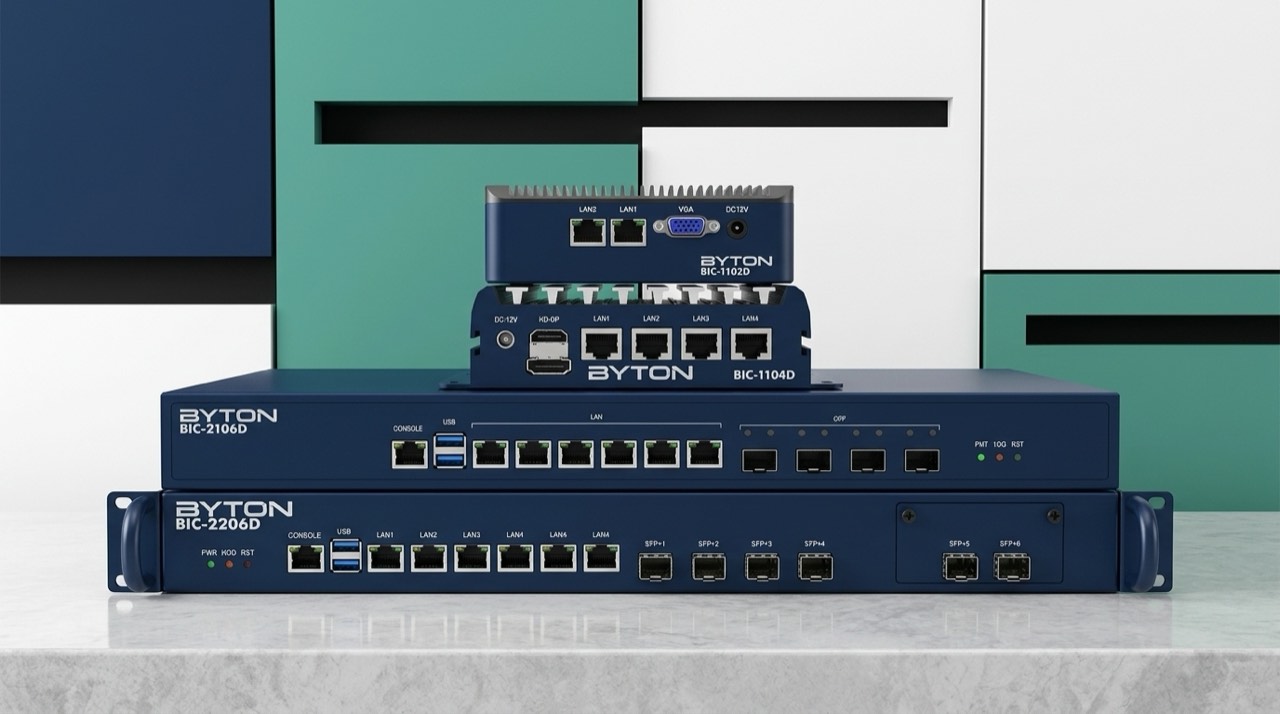
USB-to-serial converters are a common source of field failures. If you connect PLCs, meters or barcode readers, choose a system with native, isolated RS-232/422/485 and enough Ethernet ports to separate control and business traffic.
5. How long must the model stay available?
Consumer boards change every year. For fleets that will be expanded or serviced for five years or more, insist on embedded-roadmap processors, a written availability commitment and a formal change-notification process.
Our recommendation
Start from the environment and the lifecycle, then size the processor. Our engineers can run your workload on a sample unit in our reliability lab in Tai Po and share the thermal and performance results before you commit to volume.